
Thinking about mining crypto off-grid? I recently tested the Bitaxe Gamma 601 powered entirely by solar energy—and the results surprised me. This post breaks down my full setup, how much power it uses, how much DigiByte it mined, and what you need to get started with sustainable, ultra-low-power mining.
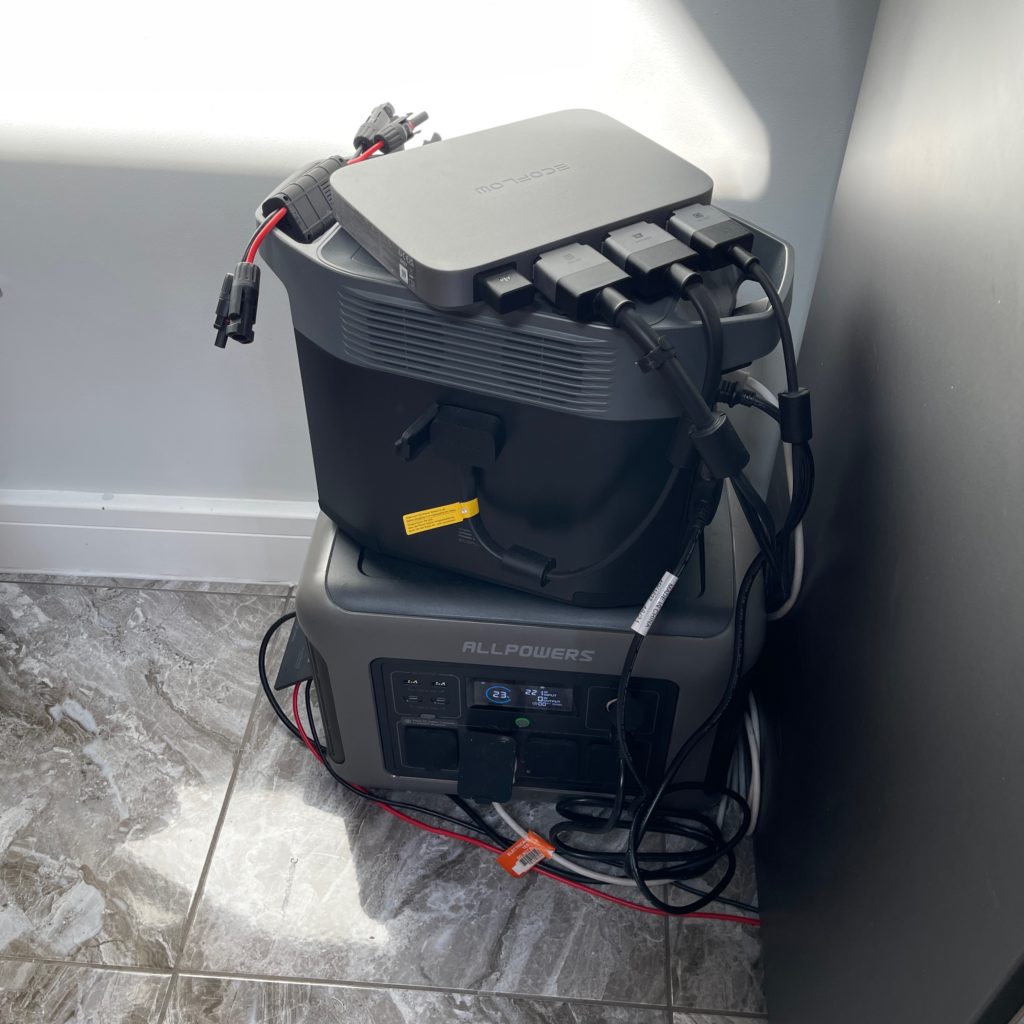
I’m running two separate beasts: the ALLPOWERS R1500, with a hefty 1152Wh LiFePO4 battery, and the EcoFlow Delta 2, packing a 1024Wh LiFePO4 capacity. Together, they’re a powerhouse duo, and it’s pretty sweet to see them charged up and ready to roll.
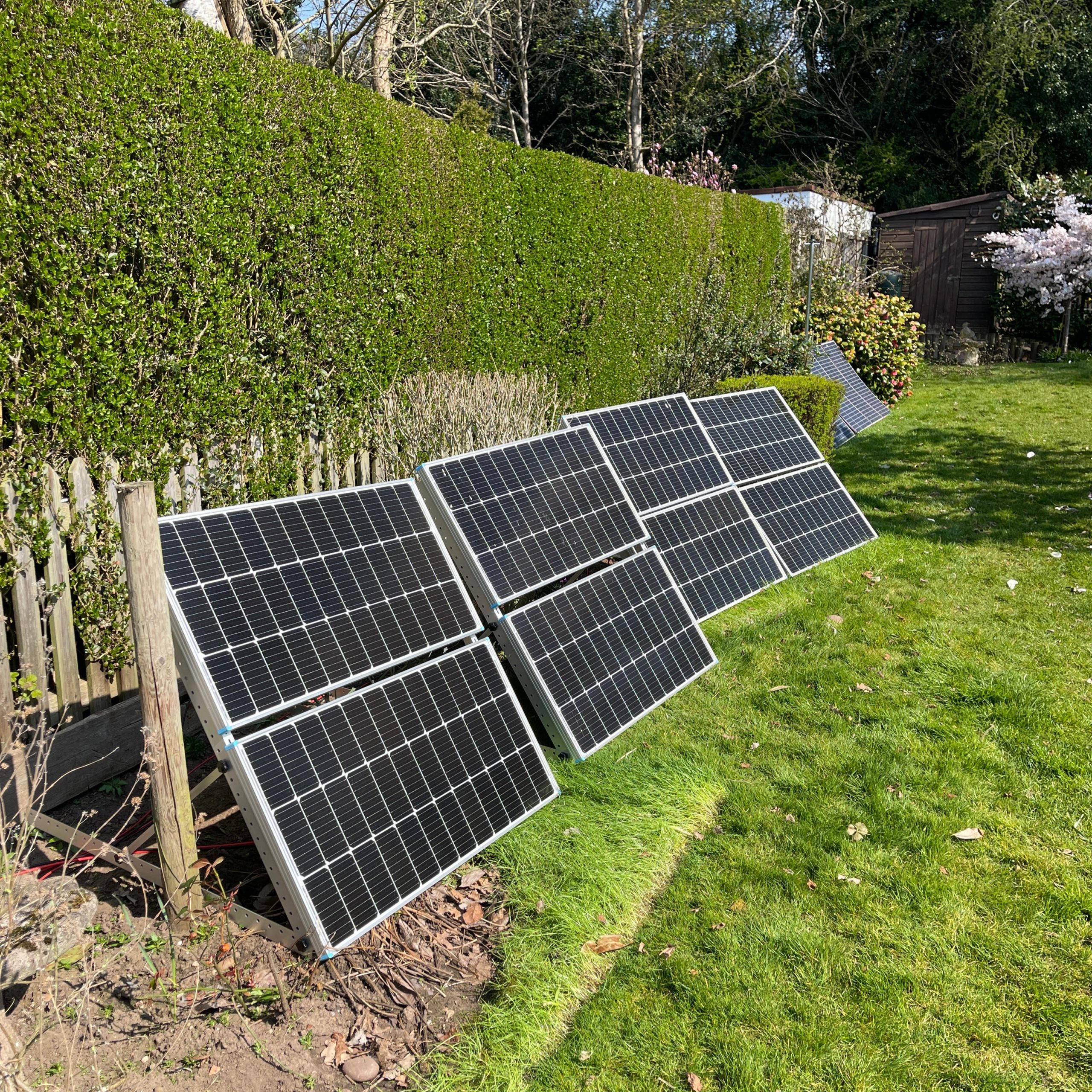
But here’s where it gets interesting. Once those power stations hit full capacity—the R1500 at 1152Wh and the Delta 2 at 1024Wh—the solar panels don’t just clock out—they keep pumping out power. And since I’m not ready to invest in a mountain of extra batteries just yet, I started brainstorming: What’s a cool, creative way to use this surplus energy? That’s when I stumbled into the wild world of cryptocurrency mining—solar-powered style.
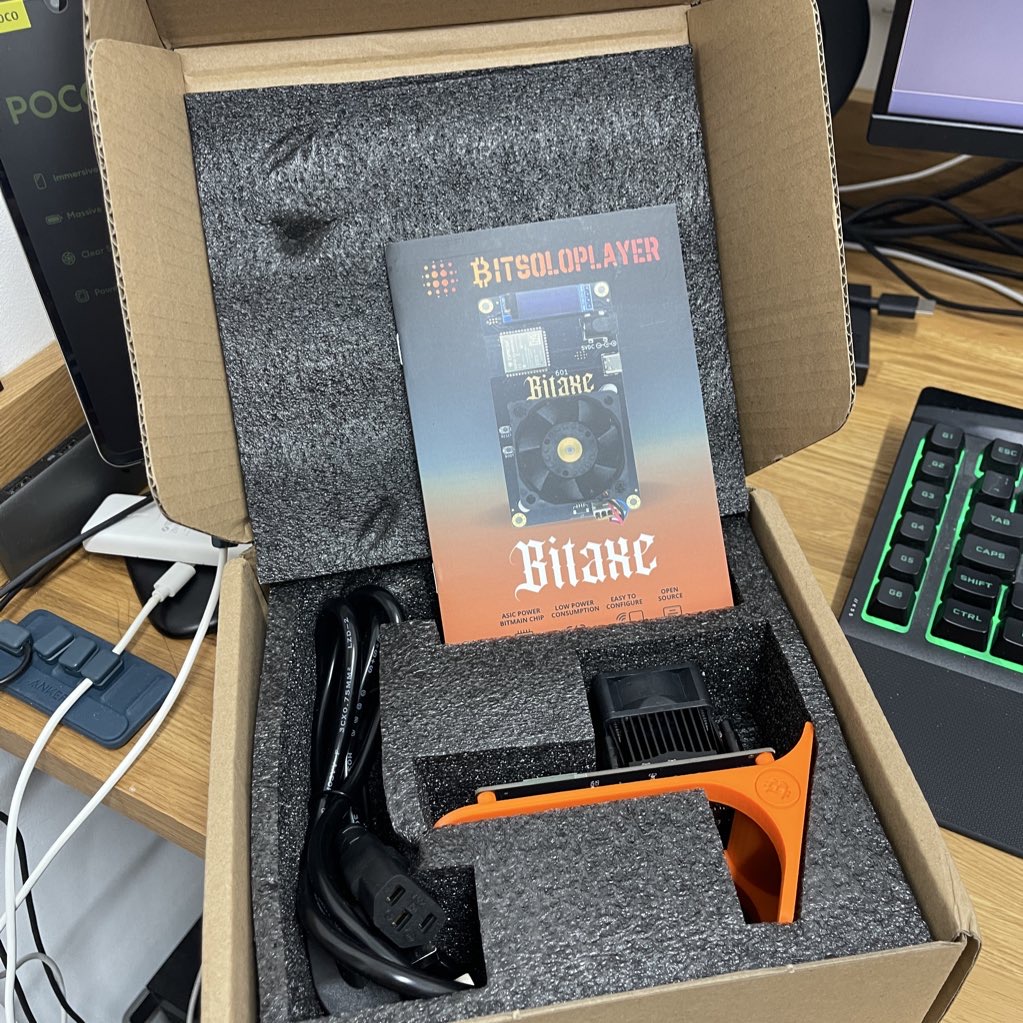
Enter the BitAxe Gamma 601
After some digging, I landed on the BitAxe Gamma 601—a pint-sized solo mining rig that’s an absolute beast for its size. This little guy cranks out 1.2 terahashes per second (TH/s) while sipping just 15W of power. Let that sink in: 1.2 TH/s on 15W. The efficiency is borderline insane, making it a perfect match for my solar setup. It’s like the Prius of mining hardware—small, scrappy, and ridiculously good on “fuel.”
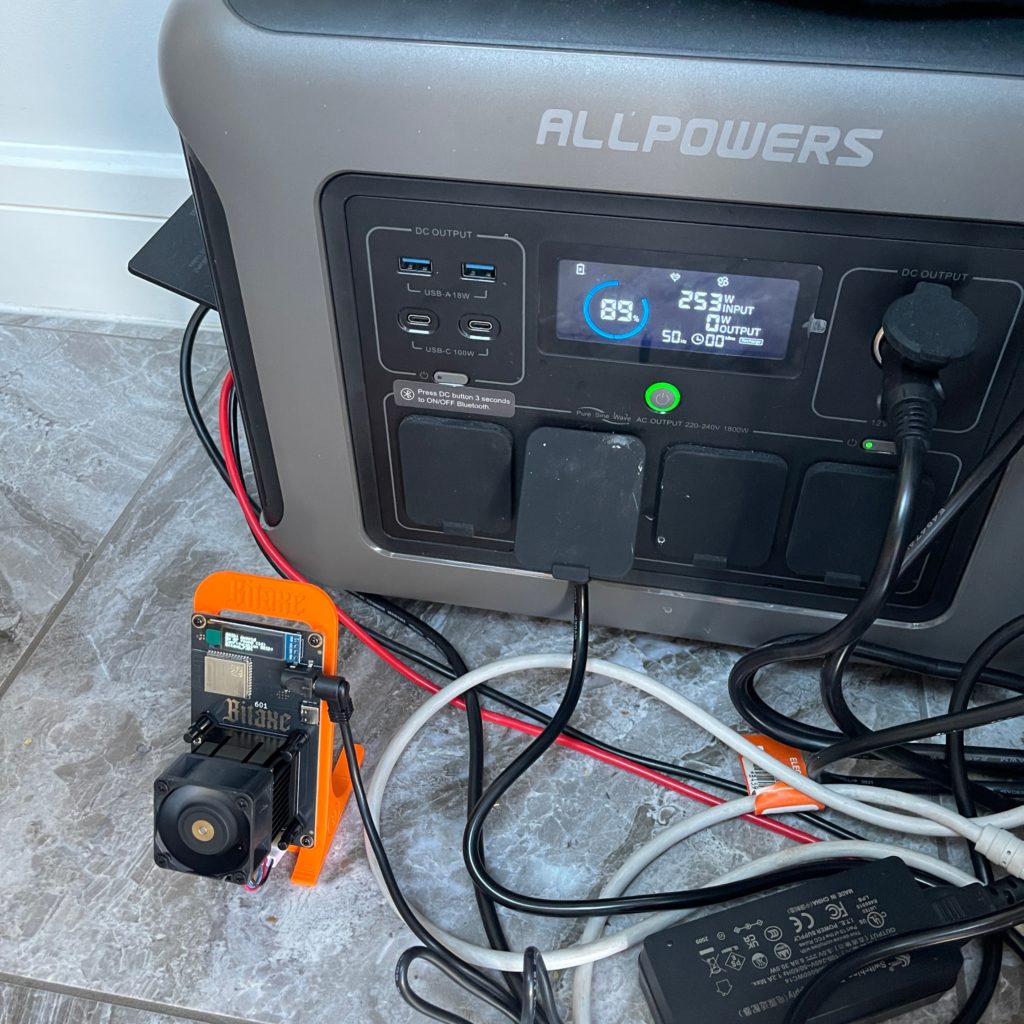
I hooked it up to my system, and now that excess solar energy isn’t going to waste—it’s powering my shot at mining some digital gold. But I didn’t just set it and forget it. I’ve been experimenting, testing different coins and setups to see what sticks. Solo mining? Pool mining? I’m trying it all.
Solo Mining DigiByte with the BitAxe Gamma 601 on SoloPool.org
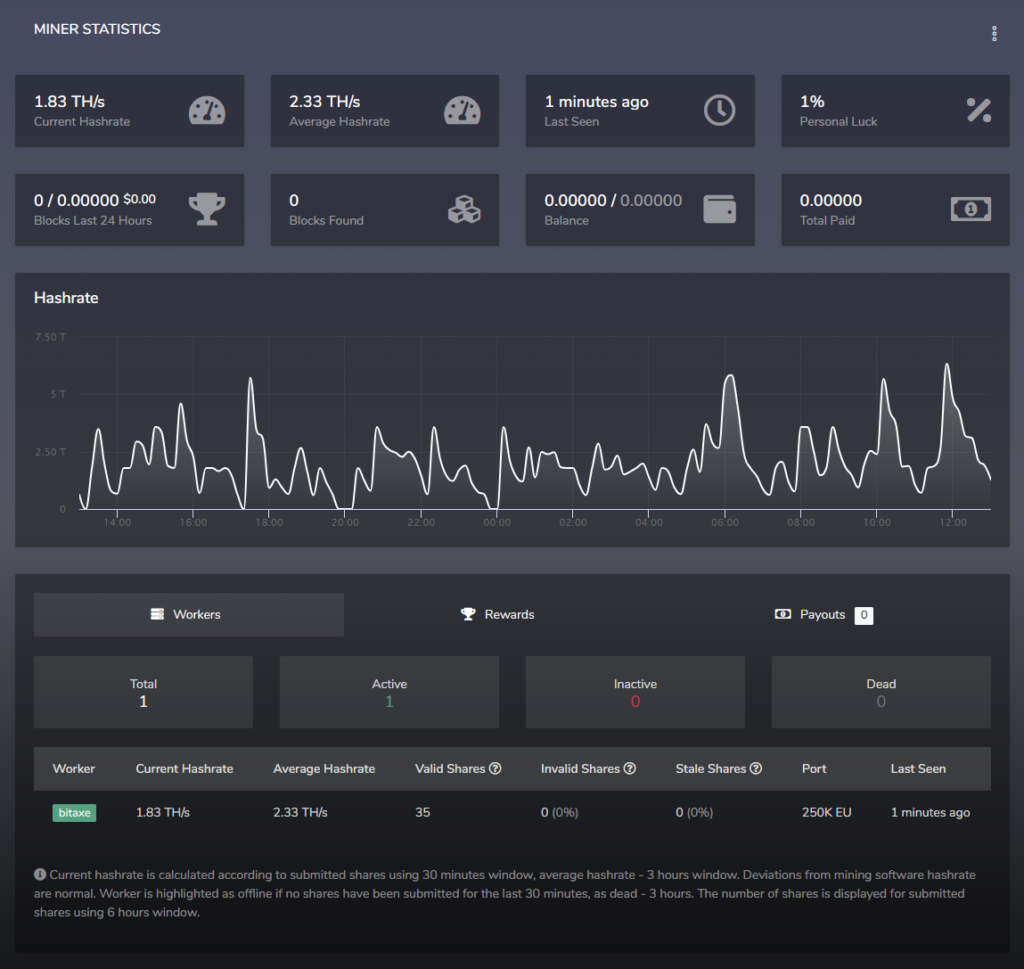
Right now, I’m solo mining DigiByte coin with the BitAxe Gamma 601 through solopool.org—a platform that lets miners like me take a solo swing at finding blocks. Solo mining is a bit of a gamble, sure—it’s just me against the network, no pool to lean on—but there’s something thrilling about going it alone. I’ve got it hooked up to solopool.org, and so far, it’s holding strong. I’ll attach a screenshot of my mining stats below so you can see how the BitAxe is performing with my solar-powered twist. With DigiByte’s fast block times and low fees, it’s a great fit for this experiment.
DigiByte Today: A Quick Stats Snapshot
As of April 2025, DigiByte’s still kicking with impressive stats. Its market cap hovers around $175 million USD, with a price per DGB at about $0.009 to $0.010, depending on the day (it’s volatile, like all crypto!). The 24-hour trading volume recently hit over $12 million USD, showing steady interest. With 18 billion coins in circulation out of its 21 billion cap, DigiByte’s network remains one of the most decentralized and longest UTXO blockchains in existence. It’s not just surviving—it’s thriving on its community’s dedication.

How to Mine DigiByte Coin with the BitAxe Gamma 601
Want to try this yourself? Setting up the BitAxe Gamma 601 to mine DigiByte is pretty straightforward once you get the hang of it. The BitAxe runs on AxeOS, a slick interface that lets you configure everything. First, you’ll need to connect it to your network—plug it in and find its IP address on the screen. Then, hop into your browser, punch in that IP, and you’re in AxeOS.
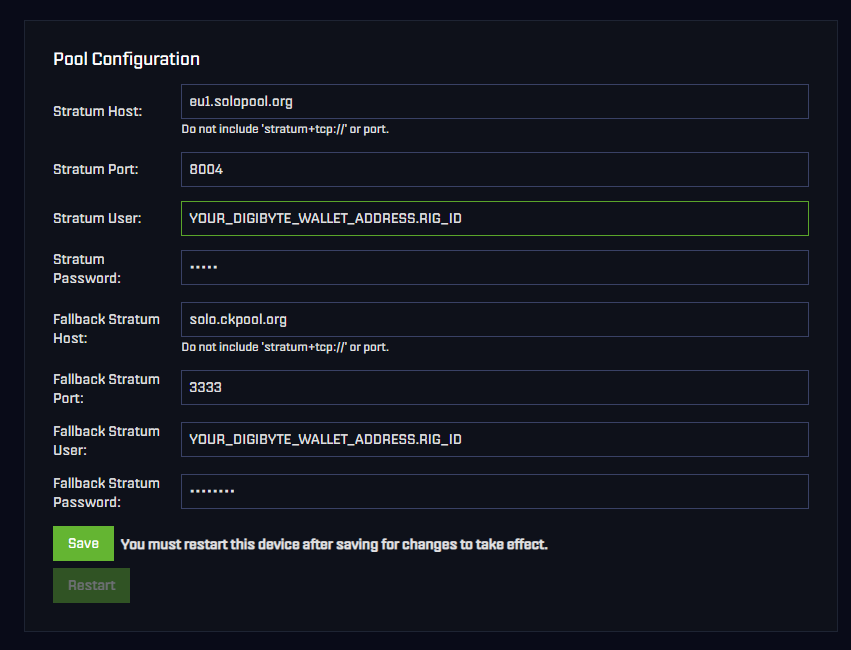
From there, head to the settings tab and click “Pool Configuration.” I’m using solopool.org for solo mining, so here’s what I entered: for Stratum Host, I chose “eu1.solopool.org” (it’s closer to my location for lower latency) and the port “8004.” For the username, use your DigiByte wallet address followed by a dot and a Rig ID (like “DGBaddress.Rig1” for reference—mine’s just my wallet plus “.BitAxe”), and set a simple password (I use “x”—check your pool’s docs for specifics). For more details, check out solopool.org’s help page.
I’ve attached a screenshot of my AxeOS settings below so you can see exactly how I’ve got it dialed in. Tweak the voltage and frequency if you want—I’m running stock settings at 15W for now, but you can push it a bit if you’re feeling adventurous. Hit save, and the BitAxe starts hashing away.
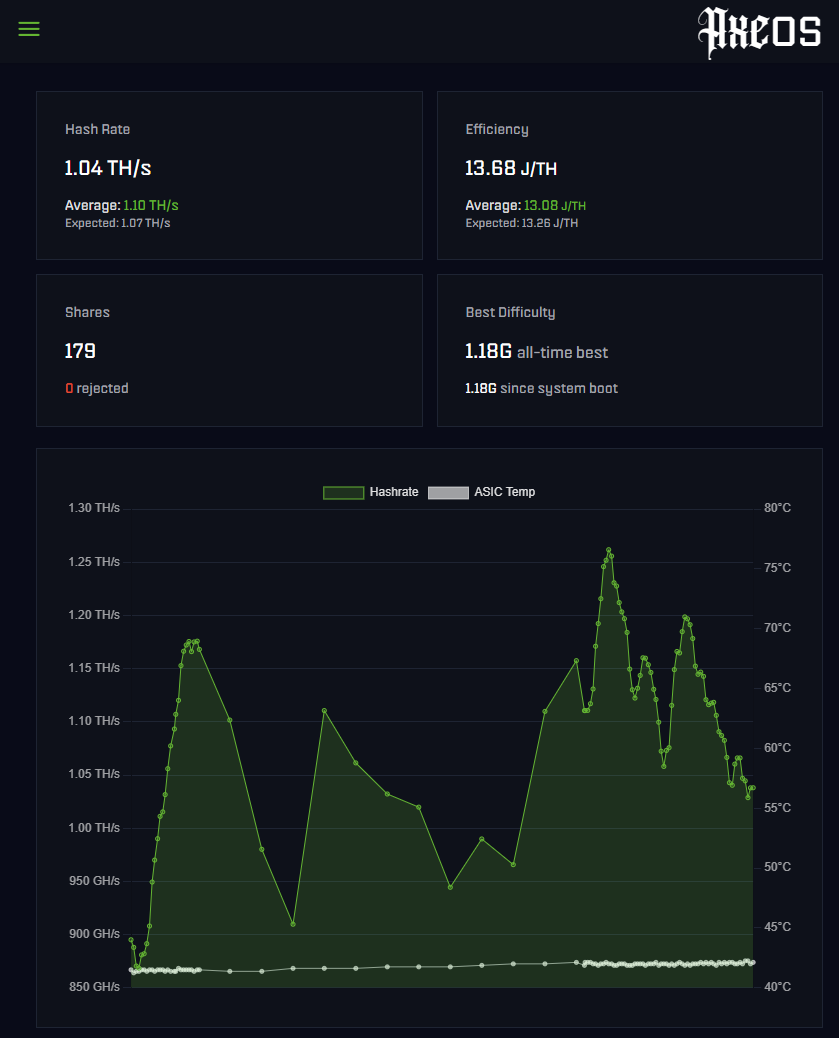
Once the pool configuration is successful, it’ll begin mining DigiByte. You can monitor the status right in AxeOS.
To check your progress, head to https://dgb-sha.solopool.org/, type in your DigiByte wallet address, and you’ll see stats like hash rate and shares submitted—I have included that screenshot below too.
What’s Next?
I’m still early in this solar-mining ride, and there’s plenty more to test. Will solo mining pay off? Should I switch coins or try a pool? How far can I push this 1200W setup? I’ll be tracking the progress—wins, flops, and all—and I’ll keep you posted as things unfold. If you’re into green tech, crypto, or just quirky experiments, stick around. This is only the beginning.
Got thoughts or suggestions? Drop them in the comments—I’d love to hear what you think! And if you’re as hooked on this journey as I am, hit that subscribe button (or follow me wherever you’re reading this). Let’s see where this solar-powered mining adventure takes us!
Products

Bitcoin Miner Bitaxe Gamma 601 1.2TH/s Solo Miners BM1370 Asic Chip
The Bitaxe Gamma 601 features a powerful BM1370 ASIC chip, delivering a 1TH/S to 1.2TH/S hashrate with 15W/TH efficiency, ideal for SOLO miners averaging one block every 75 days. Its open-source AXE OS firmware, paired with a 0.96-inch OLED screen, enables customizable performance and real-time monitoring. Compact, portable, and equipped with a quiet 5V 40mm dual ball-bearing fan for efficient cooling, it ensures stable operation, low noise, and a prolonged lifespan, making it perfect for home mining.
ALLPOWERS R1500 Portable Power Station
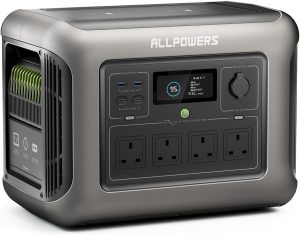
The ALLPOWERS R1500 Portable Power Station offers fast 650W solar charging, reaching 0-80% in 40 minutes with a 1500W max input. Its 1152Wh capacity powers 11 devices simultaneously via 4 AC outputs (230V, 1800W, peak 3000W), 2 USB-C (100W), 2 USB-A (18W), 2 wireless chargers (15W), and a car lighter (12V/10A). The LiFePO4 battery lasts over 10 years, retaining 80% capacity after 3500 cycles, with BMS protection and a quiet 43 dB eco mode for safety and efficiency.
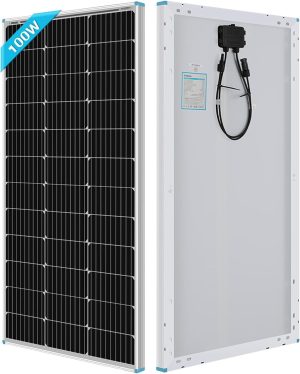
Renogy 100W Solar Panel 12 Volt High-Efficiency Monocrystalline Module
The Renogy 100W 12V Monocrystalline Solar Panel is a compact, reliable solution, delivering an average 500Wh of electricity daily (depending on sun availability). Weighing just 6.4 kg, it’s 8-10% lighter and smaller than conventional rigid panels, thanks to its advanced 9 Bus-bar cell technology and Half-cell structure. Crafted from 100% EL-tested Grade A+ solar cells with PERC technology, it achieves an impressive 22% cell efficiency, ensuring superior power conversion and a prolonged lifespan.